


California offers some of the most stunning mountaineering opportunities in the United States. From the granite walls of the Sierra Nevada to volcanic peaks in the Cascades, the Golden State presents endless options for aspiring mountaineers. However, choosing your first route requires careful planning and honest self-assessment. This guide will help you select a mountaineering route that matches your skills while keeping safety as the top priority.
Understanding Your Skill Level
Before selecting any mountaineering route, you need to evaluate your current abilities honestly. Many beginners overestimate their fitness or underestimate the challenges of high-altitude climbing. Start by asking yourself some basic questions about your experience.
Have you completed multi-day backpacking trips? Can you navigate using a map and compass? Do you have experience with basic climbing techniques? These skills form the foundation of safe mountaineering. Additionally, consider your comfort level with exposure and heights. Some routes involve steep terrain where a fall could be serious.
Physical fitness plays a crucial role in mountaineering success. Routes that seem moderate on paper can become exhausting at altitude. Therefore, assess your cardiovascular endurance and leg strength realistically. Most first-time mountaineers benefit from choosing routes under 14,000 feet to minimize altitude-related issues.
Seasonal Considerations for California Routes
Timing your climb correctly can make the difference between success and failure. California’s mountain conditions vary dramatically throughout the year. Most mountaineering routes become accessible between late spring and early fall, though exact timing depends on snowpack and elevation.
Spring climbing often means dealing with significant snow and potential avalanche hazards. However, snow can also provide easier passage over talus fields and scree slopes. Summer offers the most stable weather and longest days, making it ideal for beginners. Fall brings cooler temperatures and fewer crowds, but shorter daylight hours require faster climbing.
Winter mountaineering in California demands advanced skills and specialized equipment. Consequently, beginners should avoid winter attempts on technical peaks. Instead, focus on summer season climbs when conditions are most forgiving and rescue resources are readily available.
Researching Route Information
Thorough research prevents unpleasant surprises on the mountain. Start by consulting guidebooks specific to California mountaineering. These resources provide detailed route descriptions, difficulty ratings, and approach information. Online climbing forums and trip reports offer recent condition updates that guidebooks cannot provide.
Pay attention to route classifications and grading systems. California mountaineering routes use various rating systems for technical difficulty. Class 3 routes involve scrambling with handholds, while Class 4 requires rope protection for most climbers. For your first mountaineering experience, stick to Class 2 or easy Class 3 terrain.
Moreover, study approach distances and elevation gain carefully. A route with 4,000 feet of elevation gain over eight miles presents a very different challenge than the same gain over three miles. The approach length affects your energy reserves before even reaching technical sections.
Recommended Beginner-Friendly Routes
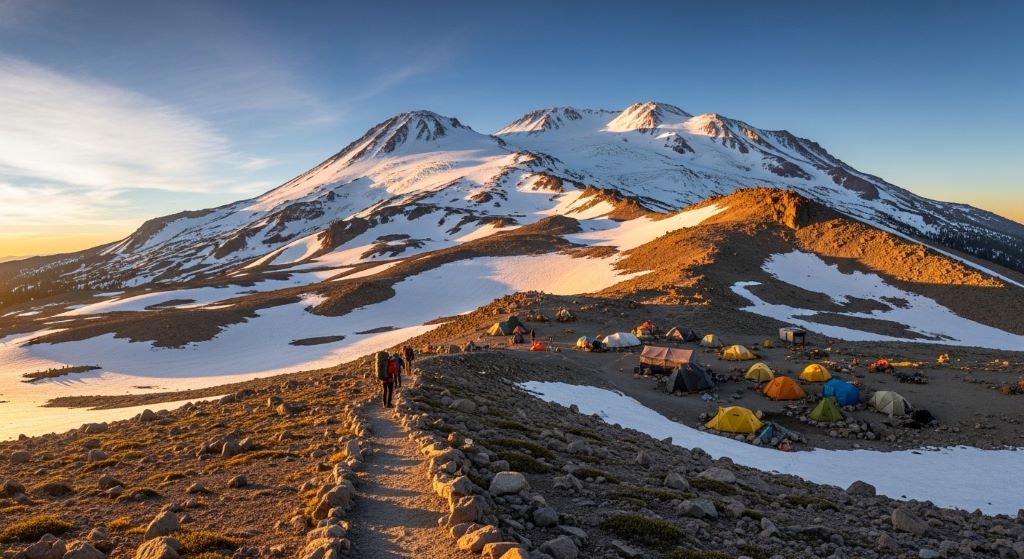
California features several excellent peaks for first-time mountaineers. Mount Shasta’s Avalanche Gulch route stands out as a classic beginner climb. This non-technical route reaches 14,179 feet and requires only basic mountaineering skills. The climb typically takes two days with an overnight at base camp.
Mount Whitney via the Mountaineer’s Route offers another accessible option for those with some scrambling experience. While more challenging than Avalanche Gulch, it provides excellent introduction to alpine terrain. The route involves Class 3 scrambling and spectacular views of the Eastern Sierra.
Additionally, smaller peaks like Mount Dana in Yosemite provide perfect training grounds. At 13,061 feet, Dana offers high-altitude experience without technical difficulties. The standard route follows a steep but straightforward climb suitable for fit hikers transitioning to mountaineering.
According to the American Alpine Club, these California peaks serve as excellent stepping stones for developing mountaineering skills.
Essential Gear and Equipment
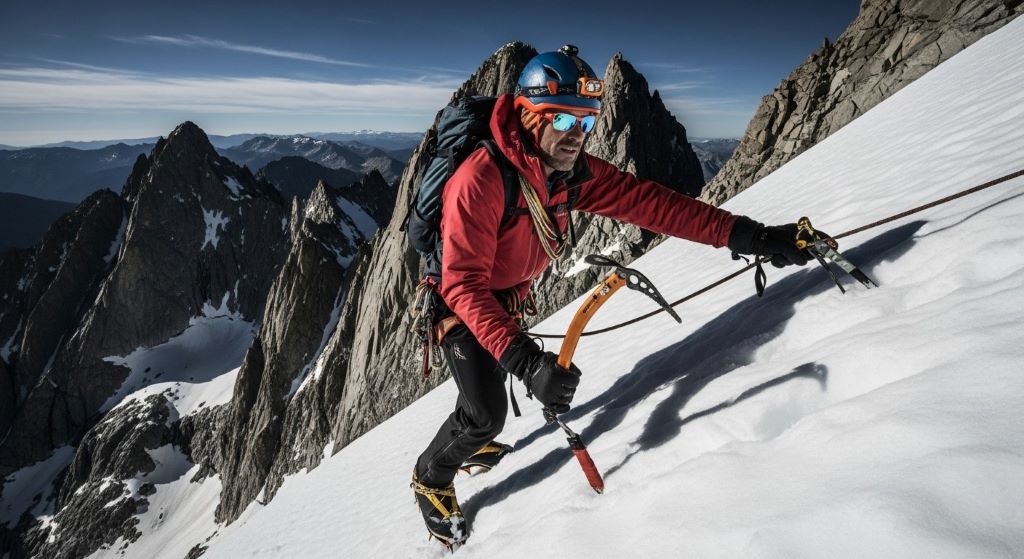
Proper equipment significantly impacts your safety and comfort on the mountain. Unlike hiking, mountaineering requires specialized gear even on non-technical routes. Your basic kit should include crampons, ice axe, helmet, and appropriate clothing layers.
Crampons provide traction on snow and ice, preventing dangerous slips. Choose 10 or 12-point crampons suitable for general mountaineering. Similarly, select an ice axe appropriate for your height and the terrain. For California’s summer routes, a 60-70 cm axe works well for most climbers.
Layering systems become critical in alpine environments where temperatures swing dramatically. Start with moisture-wicking base layers, add insulating mid-layers, and top with waterproof shells. Furthermore, bring extra insulation and emergency shelter even on day climbs. Weather can change rapidly at altitude, trapping unprepared climbers in dangerous conditions.
Navigation tools deserve special attention. Carry physical maps and compass regardless of your GPS device’s capabilities. Electronic devices fail in cold weather, and batteries drain quickly at altitude. Therefore, knowing traditional navigation ensures you can find your way in any situation.
Training and Physical Preparation
Success in mountaineering depends heavily on proper physical conditioning. Begin training at least two months before your planned climb. Focus on building cardiovascular endurance through activities like running, cycling, or stair climbing. However, hiking with a weighted pack provides the most specific training benefit.
Practice using your equipment before the actual climb. Learn self-arrest techniques with your ice axe on safe snow slopes. Additionally, become comfortable walking in crampons on various terrain angles. This familiarity prevents fumbling with gear when tired or stressed on the mountain.
Mental preparation matters as much as physical training. Mountaineering often involves discomfort, fatigue, and occasional fear. Developing mental resilience through challenging training hikes builds confidence for summit day. Moreover, practice decision-making skills by setting turnaround times and sticking to them during training.
Safety and Risk Management
Safety must remain your highest priority when choosing and climbing any route. Start by checking recent trip reports and current conditions before committing to a route. Snow conditions, rockfall hazards, and route-finding difficulties can change weekly during climbing season.
Never climb alone on your first mountaineering routes. Partners provide crucial safety backup and moral support. However, choose partners with compatible skill levels and climbing philosophies. Mismatched partnerships lead to conflicts and poor decision-making under stress.
According to REI’s mountaineering guide, establishing clear communication and turnaround times before starting prevents many mountaineering accidents.
Recognize that summiting is optional, but descending safely is mandatory. Many mountaineering accidents occur during descent when climbers are tired and less attentive. Therefore, plan your climb assuming the descent will take as long as the ascent. Set a turnaround time regardless of your position on the mountain.
Weather and Climate Factors
Understanding California’s mountain weather patterns helps you choose appropriate climbing windows. The Sierra Nevada experiences different weather than the Cascades, requiring region-specific planning. Generally, morning starts reduce exposure to afternoon thunderstorms common in summer months.
Monitor weather forecasts from multiple sources leading up to your climb. Mountain weather forecasts can differ significantly from valley predictions. Pay special attention to wind speeds at altitude, as strong winds create dangerous conditions even in otherwise pleasant weather.
Acclimatization becomes important on California’s higher peaks. Spending a night at intermediate elevation before your climb reduces altitude sickness risk. Furthermore, recognize early symptoms of altitude illness and be willing to descend if they develop. Pushing through altitude sickness leads to serious medical emergencies.
Permits and Regulations
Many California mountaineering destinations require permits or have quota systems. Mount Whitney requires advance permits that fill quickly through a lottery system. Plan ahead and apply for permits several months before your intended climb date. Alternative routes or dates might be necessary if your first choice is unavailable.
National parks and wilderness areas have specific regulations about camping, fires, and waste disposal. Research these requirements thoroughly during your planning phase. Additionally, some areas restrict group sizes or require bear canisters for food storage. Compliance with regulations protects both you and the fragile alpine environment.
Wilderness permits often require you to specify your route and camp locations. Choose realistic itineraries that allow for weather delays or slower-than-expected progress. Rangers can provide valuable current information when you pick up permits, so arrive early enough for detailed conversations.
Building Your Skills Progressively
Mountaineering skills develop through graduated experience over time. Resist the temptation to attempt challenging routes before mastering basics. Each climb should build on previous experiences while introducing one or two new skills or challenges.
Consider taking a basic mountaineering course before attempting independent climbs. Organizations like the Sierra Club and American Alpine Institute offer excellent instruction. Professional guides provide shortcuts to skill development and increased safety margins. Moreover, courses connect you with potential climbing partners who share similar goals.
Document your climbs through journals or trip reports. Reflecting on each experience helps identify areas for improvement. Note what worked well and what challenges arose. This practice creates a learning loop that accelerates skill development between climbing seasons.
Conclusion
Choosing your first mountaineering routes in California requires balancing ambition with realistic self-assessment. Start with non-technical peaks that match your current fitness and skill level. Research thoroughly, prepare properly, and prioritize safety above reaching any particular summit. California’s mountains will still be there for future, more challenging climbs after you build fundamental skills. By starting conservatively and learning systematically, you establish a foundation for a lifetime of mountaineering adventures in the Golden State’s spectacular alpine terrain.
Frequently Asked Questions
What is the easiest 14er to climb in California for beginners?
Mount Shasta via Avalanche Gulch is widely considered the most accessible 14,000-foot peak for beginners. The route requires basic mountaineering skills but no technical rock climbing. Most climbers complete it in two days with proper acclimatization and favorable weather.
Do I need mountaineering experience to climb Mount Whitney?
The main Mount Whitney Trail requires no mountaineering skills, only hiking fitness. However, the Mountaineer’s Route does require basic alpine skills including scrambling and navigation. Choose your route based on your current abilities and training.
When is the best time to start mountaineering in California?
Late spring through early fall offers the best conditions for California mountaineering. July and August provide the most stable weather and safest snow conditions. However, specific timing varies by elevation and annual snowpack levels.
How much does mountaineering gear cost for beginners?
Basic mountaineering gear including crampons, ice axe, helmet, and appropriate clothing costs approximately $500-800 for quality equipment. Renting gear for your first few climbs helps you determine preferences before investing in personal equipment.
Can I learn mountaineering skills without taking a course?
While self-teaching is possible, formal instruction significantly improves safety and accelerates learning. Basic mountaineering courses cost $300-600 but provide essential skills like self-arrest, crampon technique, and route finding under professional supervision.
Related Topics:
Best Practices When Buying An Awning For Your Caravan

