


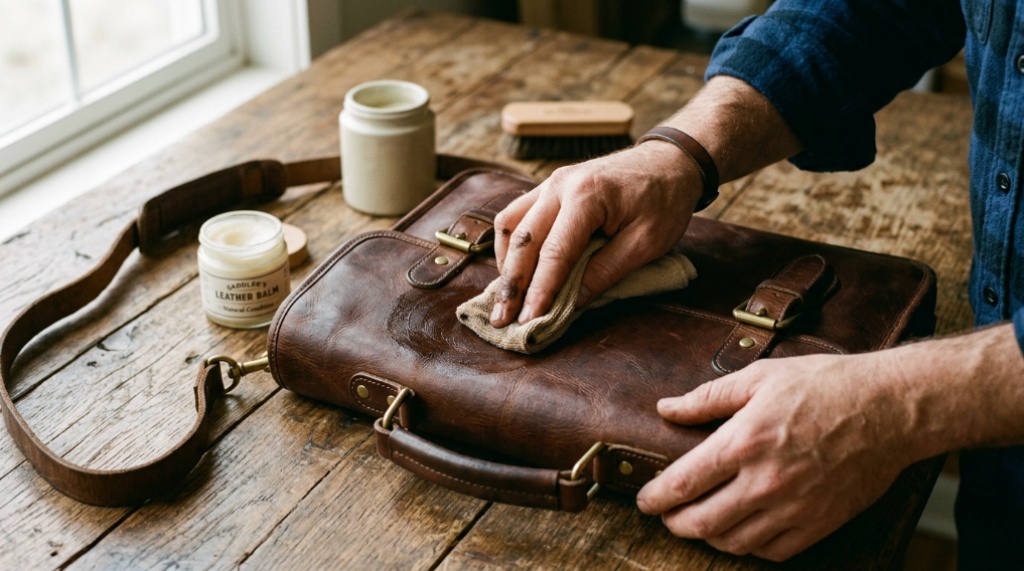
A leather briefcase carried daily absorbs more punishment than most owners realize — rain on the commute, hand oils on the handle, the slow grind of a laptop corner against the interior panel. The encouraging part is that genuine leather is remarkably forgiving, as long as you clean it before grime settles in and condition it before the fibers dry out. Skip those two habits and even a well-built bag will crack, fade, or develop a permanent shine in the wrong places. If you are still deciding which style suits your routine, check this out to see how a structured attache is constructed, since build details often determine how much upkeep a briefcase actually needs. What follows is the routine that keeps full-grain and top-grain leather looking sharp for years.
Quick Answer
Wipe the briefcase with a dry microfiber cloth weekly, clean it with a damp cloth and mild leather soap every one to three months, and apply a thin coat of leather conditioner two to four times a year. Keep it out of direct sun, dry it away from heat if it gets wet, and store it stuffed inside a breathable dust bag. The exact frequency depends on how often you carry it and the climate you live in.
Key Takeaways
- Less is more with conditioner: a thin coat applied two to four times a year beats heavy monthly applications, which can clog pores and darken the leather permanently.
- Water is the most common cause of serious damage, but heat is what actually ruins leather — never dry a soaked briefcase with a hairdryer, radiator, or direct sunlight.
- Test any cleaner or conditioner on a hidden area first, such as the underside of a flap or the interior gusset, before touching visible panels.
- Handle darkening and corner scuffing are usually cosmetic and reversible; cracking, splitting seams, and a powdery white bloom are signs of deeper neglect.
- Storage matters as much as cleaning — a briefcase stuffed into a plastic bin in a humid closet will grow mold regardless of how well you cared for it.
Why Genuine Leather Needs a Different Routine Than You Might Expect
Leather is skin, and like skin it has natural oils that keep it supple. Those oils migrate, evaporate, and get stripped away by sweat, rain, and cleaning products. When the oils are gone, the collagen fibers lose flexibility and eventually crack. That is the entire logic behind leather care: replace what daily use removes, and remove what daily use deposits.
Not all “genuine leather” behaves the same way, though, and this matters for how aggressively you should clean. Full-grain leather keeps the entire top layer of the hide, including natural markings, and develops a rich patina over time. Top-grain leather has been lightly sanded to remove imperfections, so it takes conditioner more evenly but shows scratches less gracefully. Bonded leather — often labeled “genuine leather” in marketing — is shredded leather fiber glued together with a polyurethane coating. It will not absorb conditioner the way a real hide does, and it tends to peel rather than patina. Knowing which one you own prevents you from wasting effort or over-treating a surface that cannot benefit from it.
The Core Care Routine, Step by Step
A briefcase does not need a complicated regimen. It needs consistency. Three habits cover almost everything.
- Weekly wipe-down. Use a dry microfiber cloth to remove dust from the exterior, then wipe the handle and any straps with a slightly damp cloth to lift hand oils. This takes under a minute and prevents the buildup that turns into dark, shiny patches.
- Quarterly cleaning. Dampen a soft cloth with lukewarm water, add a small amount of pH-balanced leather soap or saddle soap, and work it into the surface using light circular motions. Wipe away the residue with a clean damp cloth, then let the bag air dry naturally at room temperature.
- Seasonal conditioning. Once the leather is completely dry, apply a pea-sized amount of conditioner to a cloth and work it in with your fingers or a soft pad. Let it absorb for fifteen to twenty minutes, then buff off any excess with a dry cloth. Two to four times a year is plenty for most climates.
If you live somewhere with harsh winters or heavy rain, add a fourth step: a leather protectant spray applied once at the start of the wet season. These sprays create a water-resistant barrier without sealing the leather, but they wear off, so reapply according to the product instructions.
Cleaning: What to Use and What to Avoid
The single biggest mistake people make is reaching for whatever is under the kitchen sink. Household cleaners, dish soap, glass spray, alcohol wipes, and disinfectant sprays all strip the oils out of leather and can bleach or stain the finish. Baby wipes are a common culprit too — many contain alcohol or fragrances that dry the surface over repeated use.
Stick to products made for leather. Saddle soap is a reliable, inexpensive option for cleaning. For stubborn spots like ink or grease, use a dedicated leather stain remover and apply it sparingly with a cotton swab, working from the outside of the stain inward so you do not spread it. Always test on a hidden area first — the inside of the flap, the bottom panel, or a gusset — and wait a full day to see how the leather reacts before treating the visible surface.
Conditioning: How Much Is Too Much
Over-conditioning is more common than under-conditioning, and it causes real harm. When you apply conditioner too often, the leather cannot absorb it all. The excess sits on the surface, attracts dust, darkens the color unevenly, and can leave a sticky residue that transfers to your clothes. In extreme cases it clogs the pores and prevents the leather from breathing.
Judge by feel rather than by calendar. If the leather is supple and has a slight sheen, it does not need conditioner yet. If it feels dry, stiff, or looks dull and slightly faded, it is time. Dry climates, air-conditioned offices, and winter heating all accelerate moisture loss, so a briefcase kept in those conditions may need conditioning more often than one in a humid coastal city.
Protecting Against Water, Sun, and Everyday Wear
Rain is the most frequent threat, but the damage usually comes from how you respond to it. If the briefcase gets soaked, blot it with a dry towel, reshape it by hand, stuff it with clean paper or a towel to hold its form, and let it dry at room temperature away from heat. Never use a hairdryer, space heater, or radiator. Fast drying pulls moisture out unevenly and causes the leather to stiffen and crack.
Sun exposure is slower but equally destructive. Ultraviolet light fades dye and dries the surface, so avoid leaving the bag on a car dashboard or a windowsill for extended periods. If you commute by car, keep it in the footwell or the trunk rather than on the passenger seat in direct light.
Everyday wear is mostly cosmetic. Scuffs on the corners usually disappear with a bit of conditioner and gentle rubbing with a fingertip, since the friction generates slight warmth that helps the leather relax. Handle darkening is normal and generally considered part of the bag’s character, though regular wiping slows it down considerably.
Storage: Where Most Long-Term Damage Happens
How you store a briefcase between uses has more impact on its lifespan than most people expect. A few rules cover the essentials:
- Never store leather in plastic bags or sealed plastic bins. Leather needs airflow, and trapped moisture encourages mold.
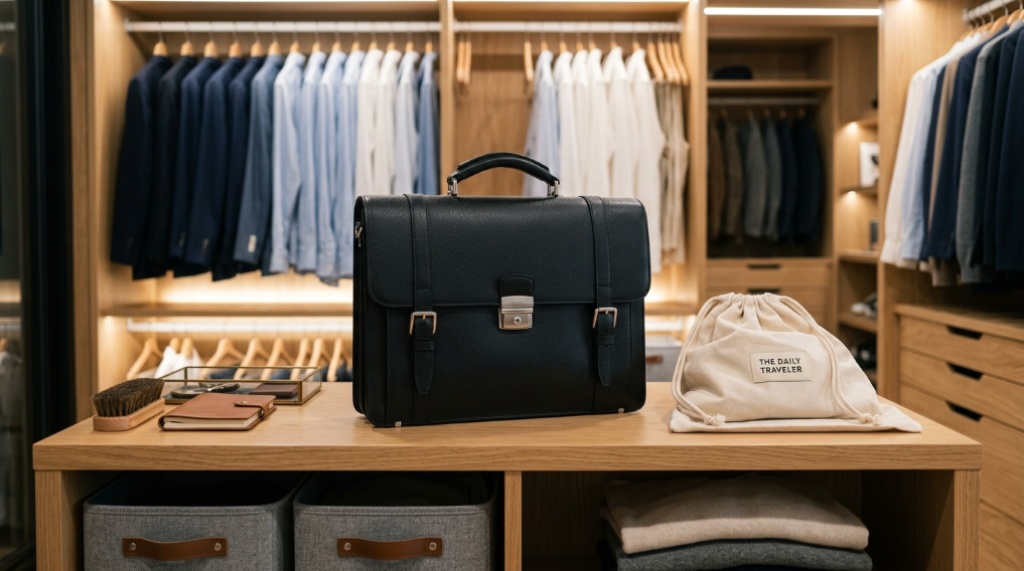
- Use a cotton or flannel dust bag instead. If the original bag is gone, a clean pillowcase works fine.
- Stuff the bag with bubble wrap, rolled towels, or acid-free tissue to maintain its shape, especially if it has a structured frame.
- Keep it out of damp basements, hot attics, and direct sunlight.
- If you will not use the bag for months, check it periodically and re-condition lightly before putting it back.
Cedar blocks or silica gel packets placed near — not inside — the bag help manage humidity in closets, but replace silica packets when they stop working, If you are looking for more high-end accessories to complement your professional style, check out an in-depth look at mid-level luxury handbag brands.
Common Mistakes That Shorten a Briefcase’s Life
Most premature leather failure traces back to a handful of habits. Using the wrong cleaning products tops the list, followed closely by drying with heat. Storing the bag empty and collapsed is another quiet killer, because creases that form during storage become permanent cracks over time. Wearing the same briefcase every single day without letting it rest is also harder on the leather than people assume — alternating between two bags gives each one time to dry out from sweat and humidity.
A less obvious mistake is ignoring hardware and stitching. Loose stitches, a failing zipper, or a bent clasp will stress the leather around them and cause tearing. Fixing these early is cheap; fixing them after the leather has torn is not.
When to Repair and When to Replace
Repair is usually the better call when the leather itself is intact. Loose stitching, worn edge paint, a broken zipper pull, or a torn lining can all be fixed by a leatherworker or cobbler for a fraction of the cost of a new bag. Cracked leather, deep splits along the spine, or widespread peeling on a bonded-leather bag are generally not worth repairing, because the structural material has failed.
If you are unsure, take the bag to a leather repair specialist for an assessment before deciding. A short consultation is typically free or inexpensive and will tell you whether the fix is realistic.
Frequently Asked Questions
How often should I condition a leather briefcase?
Two to four times per year is right for most people. Increase frequency if you live in a dry climate or notice the leather feeling stiff, and decrease it if the surface already looks glossy or feels slightly tacky.
Can I use baby wipes or hand sanitizer on leather?
No. Many baby wipes contain alcohol or fragrance, and hand sanitizer is alcohol-based, which strips oils and dries the surface. Use a damp cloth with plain water for quick cleanups instead.
What should I do if my briefcase gets completely soaked?
Blot off excess water, reshape the bag by hand, stuff it with towels or paper to hold its form, and let it air dry at room temperature away from any heat source. Do not rub the surface while wet, as this can distort the finish.
Does leather need a waterproofing spray?
It is optional but helpful in wet climates. A leather-specific protectant spray adds a water-resistant layer without sealing the pores. Reapply it at the start of each rainy season or according to the product’s instructions.
How do I remove scratches from a leather briefcase?
Light surface scratches often vanish when you rub them gently with a fingertip or a soft cloth, since the warmth helps the leather relax. Deeper scratches may need a small amount of conditioner or a matching leather cream.
Is it safe to store a leather briefcase in a closet for months?
Yes, if you prepare it properly. Clean and condition it first, stuff it to hold its shape, place it in a breathable dust bag, and keep it in a dry, temperature-stable spot. Check on it every few months.
Conclusion
Caring for a genuine leather briefcase comes down to three habits: keep it clean, keep it conditioned without overdoing it, and keep it dry and properly stored. None of these take much time, but skipping them is what turns a bag that could last a decade into one that looks tired in two years. Start with a weekly wipe-down and a quarterly clean, then adjust based on how the leather feels. If a seam or clasp starts failing, address it early — small repairs now prevent expensive ones later.

