


What is niche community growth, and why does it matter in 2026?
Snippet answer: Niche community growth is a strategy focused on building engaged micro-communities around a shared interest, problem, or identity instead of targeting broad audiences.
Mass marketing is losing relevance fast. In 2026, attention is limited, trust is fragile, and algorithms reward depth over reach. Niche community growth solves these problems by prioritizing relevance, trust, and long-term engagement instead of volume.
Unlike traditional mass marketing, which pushes generic messages to wide audiences, niche community growth focuses on specific niche audiences who share a clear need or goal. These micro-communities form around platforms like Discord, Slack, private Facebook Groups, newsletters, Substack, WhatsApp groups, and creator-led ecosystems.
In 2026, growth is no longer about how many people see your message. It’s about how many people trust it, act on it, and stay connected long-term.
Why is mass marketing becoming less effective?
Snippet answer: Mass marketing is declining because rising ad costs, audience fatigue, and low trust reduce conversion efficiency.
Mass marketing worked when attention was cheap. That era is over.
According to public ad benchmarks from Meta and Google, average CPMs increased by over 40% between 2021 and 2024. At the same time, engagement rates dropped. Brands are paying more to reach people who care less.
Three core problems explain this shift:
- Ad blindness: Users scroll past generic messages.
- Trust decay: Audiences trust peers more than brands.
- Algorithm pressure: Platforms prioritize engagement, not reach.
Mass marketing assumes scale equals success. In reality, scale without relevance produces wasted spend and weak brand equity.
Niche community growth flips this logic. It builds relevance first, then scale through advocacy.
How does niche community growth solve modern marketing problems?
Snippet answer: Niche community growth improves trust, engagement, and conversion by focusing on shared identity and value exchange.
Communities are not audiences. Audiences consume. Communities participate.
When people join a niche group, they opt into interaction. This creates:
- Higher engagement rates
- Lower customer acquisition costs
- Stronger retention
- Natural word-of-mouth growth
Case data from SaaS and creator-led brands shows that community-driven funnels often convert 2–5x higher than cold traffic. For example, several B2B SaaS companies publicly reported that community members had higher lifetime value than paid-acquisition users.
This happens because niche audiences feel understood. Messaging becomes specific. Offers feel relevant. Feedback loops improve products faster.
In short, communities turn marketing into a conversation, not a broadcast.
What are micro-communities, and why are they growing?
Snippet answer: Micro-communities are small, focused groups built around a specific interest, goal, or identity.
Micro-communities thrive because they reduce noise.
Instead of joining a massive platform where voices are diluted, people prefer smaller spaces where:
- Questions get answered
- Members recognize each other
- Content feels personal
Examples include:
- A Discord for indie game developers
- A Slack group for no-code founders
- A private newsletter for local real estate investors
These groups scale trust faster than mass platforms. Each member feels seen. This creates emotional investment, which algorithms cannot replicate.
In 2026, micro-communities are replacing followers as the real growth metric.
Snippet answer: Niche communities naturally support Experience, Expertise, Authority, and Trust through real interaction and proof.
What data proves niche community growth outperforms mass marketing?
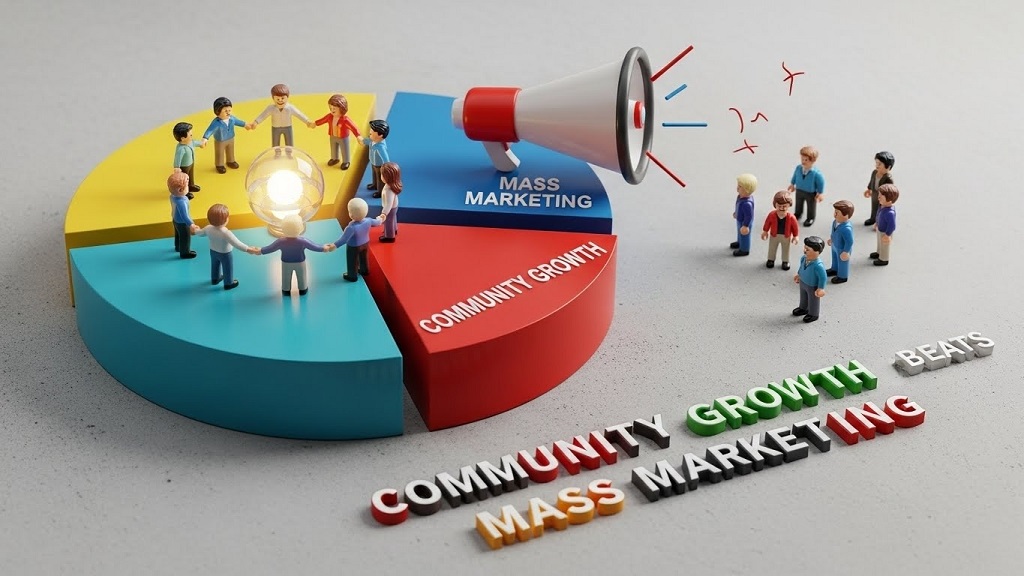
Snippet answer: Community-driven brands report higher retention, engagement, and lifetime value.
| Metric | Mass Marketing | Niche Community Growth |
|---|---|---|
| Engagement Rate | 1–3% | 10–30% |
| Customer Retention | Low | High |
| Trust Building | Slow | Fast |
| Organic Referrals | Rare | Common |
Public case studies from companies like Notion, Figma, and Webflow show that early community adoption played a major role in sustainable growth.
The pattern is consistent. When users feel ownership, growth compounds.
How do niche audiences change buying behavior?
Snippet answer: Niche audiences buy based on trust, relevance, and shared values rather than discounts.
Mass marketing competes on price and urgency. Communities compete on alignment.
Within a niche audience:
- Recommendations carry more weight
- Feedback shapes product direction
- Purchases feel like support, not transactions
This reduces churn and increases lifetime value.
In 2026, buying decisions are social decisions. People ask communities before they trust ads.
What role does targeted growth play in community building?
Snippet answer: Targeted growth ensures the right people join the community, preserving quality and trust.
Not everyone should join your community. That’s the point.
Targeted growth focuses on:
- Clear entry criteria
- Shared goals
- Aligned expectations
This prevents dilution. Growth stays healthy.
Many failed communities grow too fast. Successful ones grow intentionally.
How can brands transition from mass marketing to niche community growth?
Snippet answer: Brands should start by identifying a specific problem and building a space around solving it.
A practical transition plan:
- Define a narrow audience
- Choose one community platform
- Create value-first discussions
- Listen more than you promote
- Let the community shape content
Communities grow through consistency, not campaigns.
Why niche community growth is the future of sustainable marketing
Snippet answer: Niche community growth compounds trust, lowers acquisition costs, and builds long-term brand equity.
Mass marketing is transactional. Communities are relational.
In 2026, brands that win will not shout louder. They will listen better.
Niche community growth is not a trend. It is a structural shift in how people connect, learn, and buy.
Conclusion: Should you invest in niche community growth now?
Niche community growth beats mass marketing because it matches how people behave today. Audiences want relevance. They want trust. They want connection.
Mass reach without meaning is expensive and fragile. Communities create resilience.
If you are still chasing scale before trust, you are building on unstable ground.
Call to Action: Start small. Define your niche. Build a space where value comes first. Growth will follow.
FAQs: Niche Community Growth in 2026
What is niche community growth?
Niche community growth is a strategy focused on building engaged groups around a specific interest or problem.
How is niche community growth different from social media marketing?
Social media focuses on reach. Community growth focuses on relationships and participation.
Are micro-communities scalable?
Yes. They scale through advocacy and referrals rather than ads.
Which platforms are best for niche communities?
Discord, Slack, private Facebook Groups, and email-based communities perform well.
Is niche community growth suitable for small businesses?
Yes. Small audiences with high trust outperform large cold audiences.
Related Topics: How to Move a Mobile Home for Free: A Step-by-Step Guide
Related Topics: Pet Simulator X Wiki: Your Ultimate Guide
